BMKG often provides information related to the condition of tropical cyclone seeds that appear in the Indonesian region. Actually, what is a tropical cyclone?
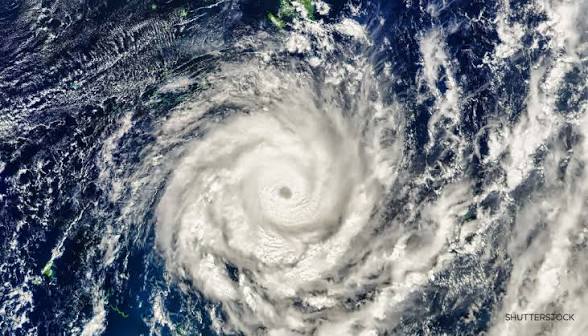
A tropical cyclone is a weather disturbance in the form of a large whirlwind that forms due to low air pressure in an area. Tropical cyclones have different names in different parts of the world. In the West Pacific Ocean, it is often referred to as a "typhoon". In the areas around India and Australia, the term used is "cyclone". Meanwhile, if it forms in the Atlantic Ocean, it is called a "hurricane". All of these terms actually refer to the same thing, namely a tropical storm or tropical cyclone. A tropical cyclone is a strong storm that has a wide reach, with an average radius of around 150 to 200 kilometers. This storm forms over a large ocean, especially in areas with warm sea surface temperatures, namely above 26.5 ° C. In the center of the storm, strong winds rotate at speeds of more than 63 kilometers per hour.
Tropical cyclones can be formed by several factors, namely:
- The sea surface temperature must be at least 26.5°C to a depth of about 60 meters.
- Unstable atmospheric conditions allow the formation of Cumulonimbus clouds namely thunderclouds that indicate strong convection activity.
- A relatively humid atmosphere at an altitude of about 5 km (±15 thousand feet).
- Tropical cyclones usually form in areas that are at least 500 km from the equator, because the Coriolis force needed to form wind vortices is very weak near the equator.
- Atmospheric disturbances near the earth's surface take the form of swirling winds accompanied by the meeting of winds from various directions at one point (convergence).
Tropical cyclones can have a major impact on the areas they pass through due to their large size, very strong winds, and the thick clouds they bring.
At sea, tropical cyclones cause large waves, heavy rain, and strong winds that can endanger international shipping and risk sinking ships. Cyclones can also rotate sea water and produce very high waves.
Meanwhile, on land, tropical cyclones can damage vehicles, buildings, bridges, and other objects. All of these can be turned into dangerous flying debris by the force of the wind and storm.
One of the worst impacts of a tropical cyclone is a storm surge , which is a drastic rise in sea levels that can reach and damage coastal areas.
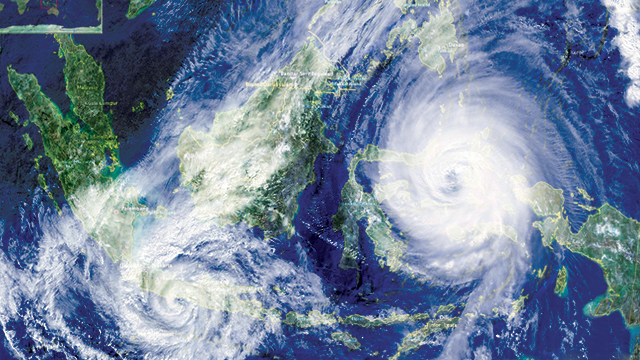
A tropical cyclone once appeared in Indonesian waters, on April 4, 2021 in the Sawu Sea , NTT. This cyclone was named Seroja by TCWC Jakarta, which brought heavy rain, strong winds, flash floods, landslides—especially in the Flores and Rote Island (NTT) areas which caused hundreds of victims and widespread damage.
On November 17, 2021, TCWC Jakarta monitored cyclone seed 90S in the southeastern Indian Ocean. On November 22, this seed developed into Cyclone Paddy , located south of Central Java (13.3° S, 108.0° E). This cyclone caused heavy rain in the Central Java region.
A cyclone also occurred south of Surabaya on November 22, 2017, named Cempaka. Cyclone Cempaka caused heavy rain, flooding, and landslides in Central Java and Yogyakarta, killing 41 people and causing losses of around US$83.6 million.
Source:
Surinati , D., and Kusuma, DA 2018. Characteristics and Impacts of Tropical Cyclones Developing Around the Indonesian Region. Oceana , 43 (2): 1-12.
Meteorology, Climatology and Geophysics Agency (BMKG). (2021, April 4). Tropical Cyclone Seroja and Its Impact in NTT . Retrieved from https://www.bmkg.go.id/berita/?p=siklon-tropis-seroja-dan-dampaknya